
President’s Corner 2nd Quarter Issue 2026
Mental Wellbeing – Opportunities and Challenges for Integration into Aviation Safety
Mental wellbeing has been an important part of the aviation lexicon for decades, especially since the Germanwings murder-suicide event in 2015. Much research and many documents have been produced in the last 11 years highlighting the importance of this topic across the globe. Publications such as the EASA ME SAFE documents and rulemaking, the Royal Aeronautical Society’s three position papers on psychosocial risk in aviation, the FAA’s Mental Health and Aviation Medical Clearances ARC, the NTSB’s Navigating Mental Health in Aviation Summit, the DOT OIG Final Report on aviation mental health, CASA and CAA-NZ Safe Haven project, The Aerospace Medical Association’s workshop and position papers, the Flight Safety Foundation’s White Paper, the International Society of Air Safety Investigators workshops, Singapore’s Tripartite agreement, ICAO’s many mental health working papers and its mental health working group, AOPA’s Air Safety Foundation’s mental and bran health initiative, and The Aviation Mental Health Act in the US Congress are only a few of the recent efforts.
Additionally, a significant number of peer reviewed scientific papers published in globally recognized journals are addressing the challenges of optimizing mental wellbeing in aviation and proposing solutions. Dr. William Hoffman and Professor Robert Bor are leading many of these efforts for scientific research and textbook publication. We are also seeing the growth of organizations setting up programs for mental health enhancement for all aviation safety personnel including cockpit and cabin crew, maintenance engineers, air traffic controllers, business aviation and aviation training organizations. The International Peer Aviation Assist Coalition has been leading the global education, training and support for all aviation safety sensitive personnel, both above and below the wing. It has also formed an academic committee to consolidate research in this field.
The Challenge – Integration into Safety Management Systems
Intuitively and anecdotally, optimum mental health is thought to improve performance and enhance safety. Cognitive research shows the direct relationship between mental health compromise and decreased performance in several tasks relevant to aviation. However, to demonstrate safety benefits from programs supporting mental wellness in aviation professionals, relevant data must be measured to evaluate the effectiveness of such programs and opportunities for improvement when programs may fall short of expectations. This is the essence of the Safety Assurance component of Safety Management Systems (SMS).
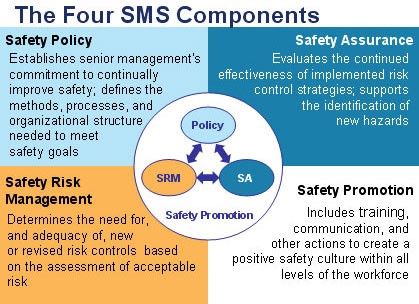
The Aviation Safety Coalition (ASC), led by the MITRE Corporation, with experts from the aviation safety, operations and aeromedical fields is working to develop recommendations for collection of mental wellbeing and support data useful to the design of an aviation medical SMS. Any data gathered must be ethically collected, de-identified, anonymized for the individual and organization, aggregated and securely stored with impartial analysis and feedback (See two articles linked below). In aviation, similar programs exist in the operations world such as ASAP, ASIAS and FOQA. Each has led to valuable insights to improve safety while protecting individuals and their organizations for the sole purpose of enhancing safety. The FAA’s philosophy is to integrate SMS principles in all activities. The MITRE ASC will forward its recommendations to inform the FAA Reauthorization Act’s Section 411/413 Task Group of potential opportunities for SMS and mental wellbeing programs in aviation. In the future, we hope to see pilot unions and professional groups working with operators to reduce psychosocial risk, improve wellness and enhance the optimal performance of all aviation safety sensitive personnel.
Traction among many professional organizations across the world and among diverse aviation populations is building to recognize the importance of supporting the mental wellbeing of all aviation safety personnel to the safety and efficiency of all operations. Promoting safer skies and healthier people will be the desired outcome.
Be well,
Quay
N321QS
Journal of Occupational and Environmental Medicine
Integrating Mental Health and Wellness into Aviation Safety Management Systems: Current Knowledge and Future Directions
Hoffman WR, Bor R, Gordon S, McCarthy P, Shaw L, Manderson K, Sprott T, Miranda E, Snyder Q. Integrating Mental Health and Wellness Into Aviation Safety Management Systems: Current Knowledge and Future Directions. J Occup Environ Med. 2026 Apr 1;68(4):e320-e324. doi: 10.1097/JOM.0000000000003630. Epub 2025 Nov 27. PMID: 41299817.
Recommended Practices Related to Data Collection in Aviation Peer Support Programs
Hoffman W, De Rooy D, Bekker A, Bor R, Fielding D, Snyder Q. Recommended Practices Related to Data Collection in Aviation Peer Support Programs. Aerosp Med Hum Perform. 2025 Sep;96(9):857-860. doi: 10.3357/AMHP.6644.2025. PMID: 40925618